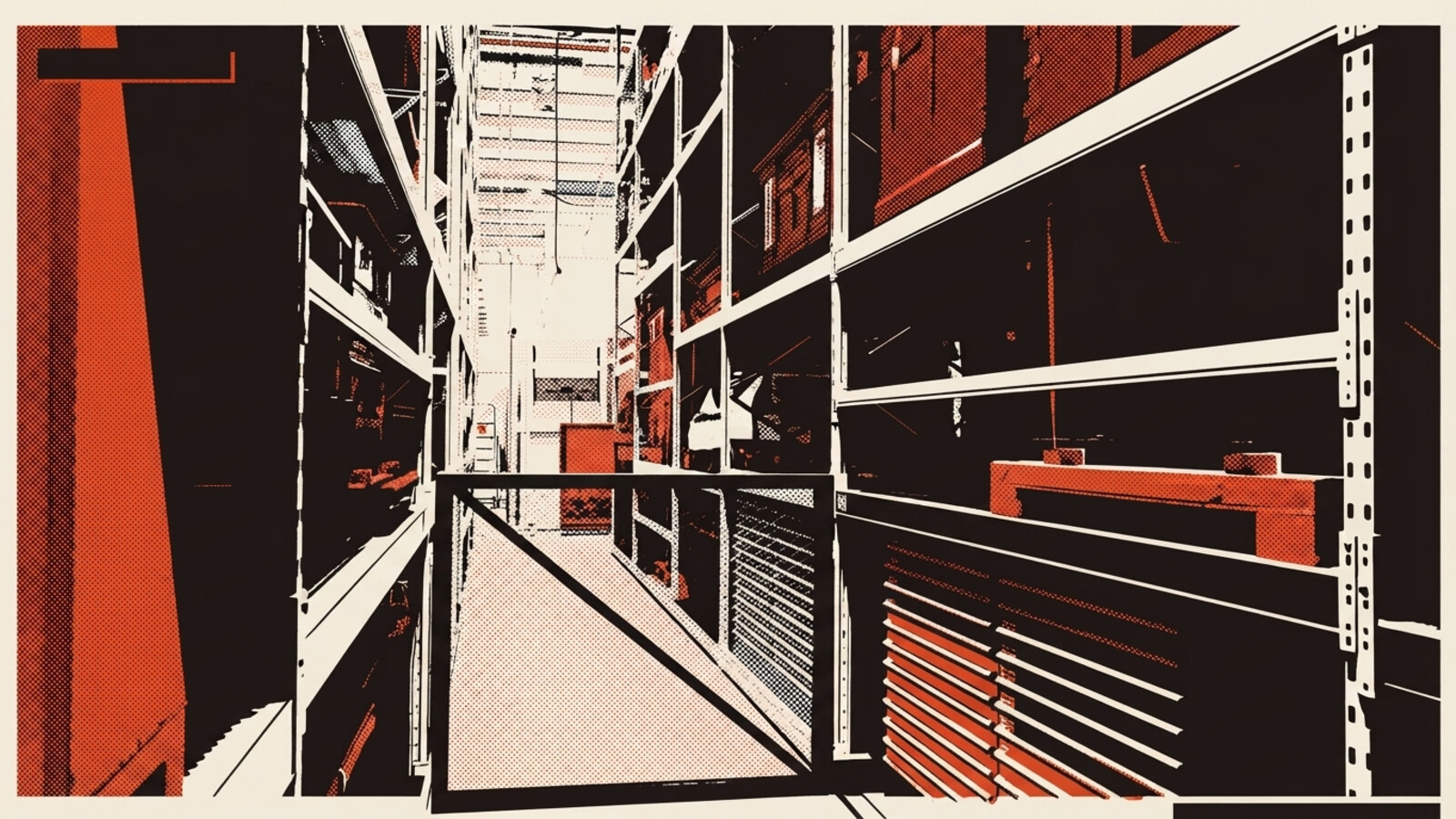
A forklift clips the end frame of a racking bay in aisle G. The upright is bowed, the beam has dropped a notch, and the pallets above it are still loaded. Someone photographs it on their phone, sends it to a group chat, and gets back a thumbs up. Two weeks later the bay is still loaded, the photo has scrolled off the top of the chat, and nobody can say whether the fix was booked or who owns it.
That is the same failure we built IssuesId to stop on building sites. Different building, same shape.
The pattern does not care what the building is for
Capture the issue where it is, with a photo and a location. Assign it to someone who owns the fix. Track it until it is closed, and keep the trail. That loop is what a warehouse needs for a damaged racking bay, what a factory needs for a guard that has been removed from a machine, what a cold store needs for a line that is weeping refrigerant onto the floor. It is the same loop a site super needs for a waterproofing defect in unit 1204.
The reason it carries over is that the hard part was never the trade knowledge. The hard part is that the person who spots the problem is walking, has thirty seconds, and is standing somewhere with no signal. A hazard photographed and logged against a location and an owner, then tracked to close, is two things at once: the fix getting booked, and the record that the fix happened. When a WHS inspector asks what you did about the racking after the strike, "here is the issue, here is who it went to, here is the timestamped photo of it repaired" beats a scroll through a group chat.
What carries over cleanly
The capture is trade-agnostic. A photo with its own capture time, at a named location proves the same thing whether the subject is a cracked slab or a cracked pallet racking upright. Nobody can wave it off as taken anywhere, anytime.
The assignment is trade-agnostic. Two taps to send the fault to the responsible party works the same whether that party is a plumber or your maintenance fitter.
Offline is trade-agnostic, and warehouses need it more than people expect. The far end of a distribution centre, the inside of a coolroom, a steel-clad plant room: these are dead zones exactly like a lift core is a dead zone. The phone is the source of truth until it syncs, so the fault gets logged where it is found, not retyped from memory back at the desk.
And the record at the end is trade-agnostic. A compliance-ready report with a full audit trail reads the same to a certifier and to a WHS regulator. Both want to see that the issue was caught, owned, worked and closed, with each step stamped against a name.
What is still construction-shaped, honestly
We came out of construction, and it shows in the words. The core object is called a defect, and it still has quality, variation and backcharge on the same track. A backcharge makes total sense when a subbie caused rework. It is a stretch to explain to a plant manager who just wants to log a jammed conveyor.
The location tree is the other one. It is built as building, then level, then apartment, then room. A warehouse is not shaped like that. You can absolutely model aisles and bays and stations inside the same tree, and people do, but you are bending a structure that was drawn for residential floors. It works. It is not yet named for you.
When this was first written there was no asset register at all. Since September 2026 there is a plant register: each forklift or machine has its make, model and serial, a service interval that reminds the managers before it falls due, its insurance, the operators and their tickets, and a daily pre-start that tells the managers when someone answers No. What it still does not do is hang defects off the machine. A fault is filed against a location, so if you want the full fault history of FL-07 over its life, you are still reading defects that mention it, not opening one record. For a lot of operations teams that is fine. For some it is the missing piece, and I would rather say so than pretend.
Where this actually lands
If your operation is drowning in group chats and a shared spreadsheet of open faults, the thing you need is not construction software or warehouse software. It is the capture-assign-close-with-evidence loop, run by a tool that does not lose the fault when the signal drops in aisle G.
We built that loop for defects on a slab. It turns out a bowed racking upright, a missing machine guard and a weeping refrigerant line all fit through it without changing what it is. The labels are still a bit construction-shaped, and we are broadening them into facilities, strata, property and manufacturing as we go. The loop underneath is the part that already fits, and it is the part that matters.