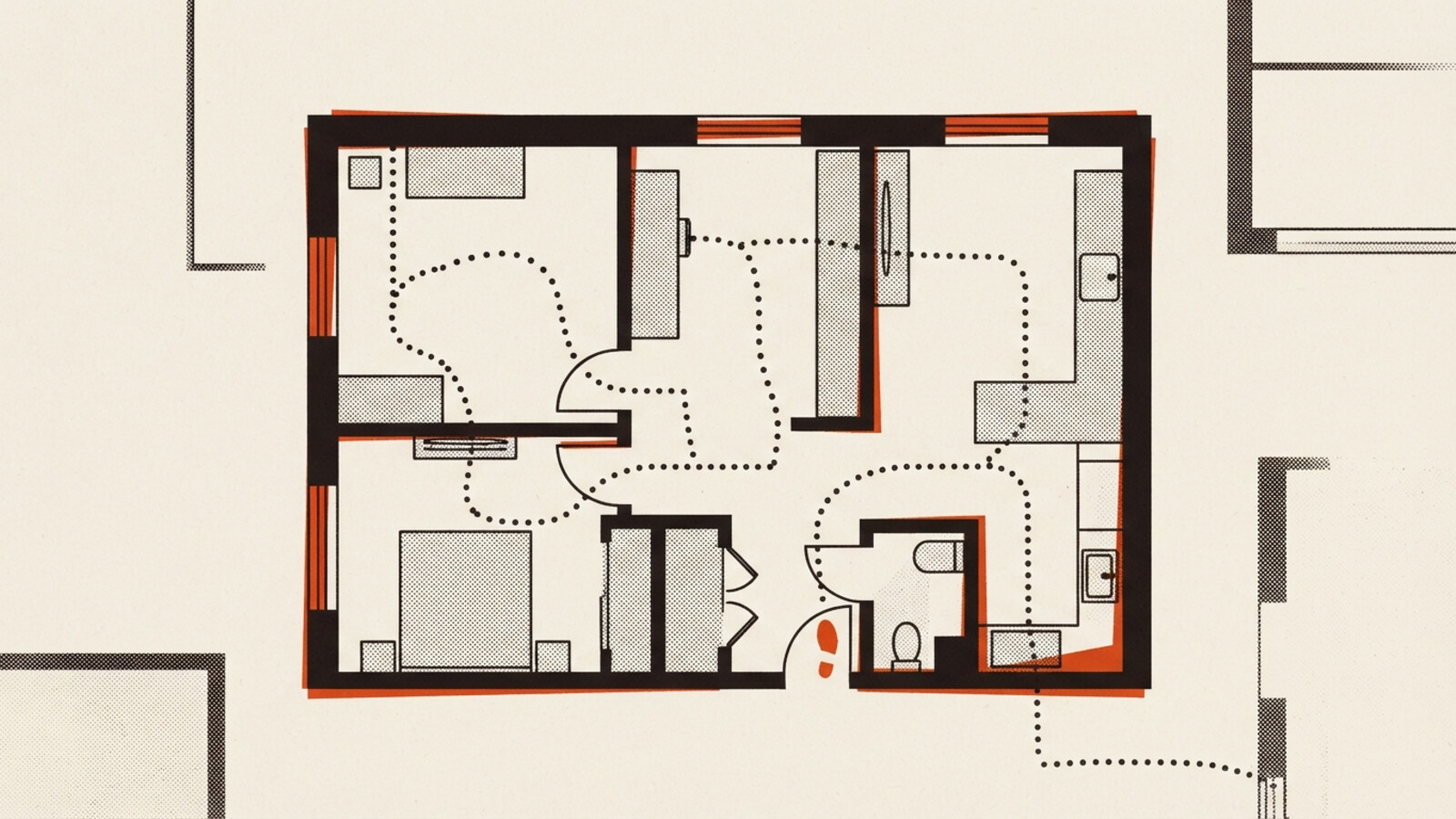
Level 9, fourteen apartments, the Tuesday before the client's rep walks it on Friday. Three of us, three clipboards, and the unspoken plan is that the client's list on Friday will be short because ours on Tuesday was long.
By Friday afternoon the client's list had forty-one items on it. Ours had had sixty. Nineteen of ours were fixed. Of the forty-one on hers, twenty-two were things we had found on Tuesday and not fixed, and nineteen were things we had not found at all, including the shower screen in 9.07 that leaked outside the frame when you actually ran the shower for ten minutes, which none of us had.
The walk is a rehearsal for the next walk. Treat it like one.
That is the opinion. Every pre-completion inspection is for the benefit of the person who walks after you. The site team walks so the client's rep finds less. The client's rep walks so the certifier finds less. The certifier walks so the owner, in month three, with a phone, finds less. The list should get shorter at each stage, and it only does if two things are true: your walk found what theirs will find, and what yours found actually got fixed in between.
Friday's forty-one is what it looks like when neither is true. Nineteen things we did not test for, and twenty-two things we did find and then put on a clipboard where they stayed.
What we did not find, and why
The nineteen were not subtle. A shower screen that leaks when you run the shower. A balcony that ponds when you tip a bucket on it. A rangehood that does not vent because the duct was never connected above the bulkhead. A smoke alarm that sounds but does not interconnect.
What they have in common is that you have to do something to find them. Run the shower for ten minutes, not ten seconds. Tip the bucket. Turn the rangehood on and hold a tissue to it. Press the test button and then go and listen in the other bedroom. A walk-through finds what is visible from the doorway. A pre-completion inspection has to find what the owner will find in the first week of living there, and the owner runs the shower for ten minutes.
So the checklist cannot say "bathroom finished to a good standard". It has to say "floor falls to waste; no ponding after water test", and the person answering has to have done the test. One observable thing per line, phrased so Yes means it passes, and a few of them with a test in the wording. We put the fifty-five we use now on the pre-completion inspection checklist page, free, because the list is not the clever part.
What we found and did not fix
The twenty-two are the worse failure, because we had done the work of finding them.
They sat on the clipboard. On Tuesday night somebody typed them into the register, got most of the way through, and the two that did not make it were the two that mattered. The ones that did make it got issued on Wednesday to trades who could not all come Thursday. By Friday some were fixed, some were in progress and nobody had a list of which, so the client's rep found them again, and now they were on her list with her number, which is the number the retention conversation uses.
The gap between a Fail on a checklist and a defect on the register is where this happens, and it is a gap of about one evening. Close it and the twenty-two become zero. The way to close it is for the Fail to be the defect: the moment the check is answered No, the defect exists, with the photo taken in the room, linked to the question, issued that afternoon rather than typed that night. In IssuesId a No on an inspection checklist does exactly that, and when the defect is closed the question flips back to Yes on its own, so the Friday walk opens on a checklist that is already current.
Hold points are for the things that stop the walk
Four of the fifty-five we treat differently. The waterproofing certificate for each wet area. Falls to waste. The balustrade fixing. The smoke alarm interconnect.
These are hold points, which is a word borrowed from the ITP and means the unit does not get signed off with one of them open, whatever else passes. Not because they are the most common failures; grout is more common. Because they are the ones that are expensive, dangerous or invisible later. A missing waterproofing certificate at PC is a conversation with the certifier that stops everything; a lifted balustrade is a conversation with somebody's lawyer.
On paper a hold point is a suggestion. The sheet cannot stop you signing it. We had answered D1, the waterproofing certificate, as Pass on every unit on level 9 because the certificates "were coming". Three never came. In the app a hold point shows on the checklist until it is released and on the organisation-wide list of every checklist on every job, which means the person who can see all forty open hold points across the building is not the person being leaned on by a pump booking.
Who walks, in order
The site team first, a week or two out, with the list above and the tests done. The client's rep second, walking the same rooms with the Door Sheet, one page per room, printed from the register, so she is ticking what we found rather than discovering it. On a residential job the purchaser or their inspector third, usually at pre-settlement, against the same list with a per-defect pack. The certifier last, against the condition that the works are complete except for minor defects, which means against the list the walks above produced.
Four walks. If the first is done properly the fourth is a formality. If it is done the way we did level 9 that Tuesday, the fourth is where the forty-one items get their official number.
Level 9, run again
Same Tuesday. Three of us, three phones, one checklist allocated to all fourteen units from the Locations page in one step, same fifty-five checks, same reference numbers. We run the showers and tip the buckets, because the checks say to. Every No raises its defect with the photo there and then; by Tuesday afternoon the trades have their emails. Thursday the tiler and the plumber have been, their items are marked complete with photos, and the foreman walks the completions and closes what passes. Friday the client's rep opens 9.01 with the Door Sheet for 9.01 and the open count on level 9 is seven, all of them known, all of them issued, none of them a surprise.
The difference between forty-one and seven is not a better inspector. It is a Fail that becomes a defect in the room instead of on a clipboard, and a hold point that holds. The short version of who walks and why is at what is a pre-completion inspection.